
Digital Interactive Installations: Programming interactive installations using the software package Max/MSP/Jitter - Frank Blum
-25% ar kodu BOOKS
Piegāde 12-18 darba dienu laikā
30 dienu atgriešanas politika
Inhaltsangabe:Abstract: The arts have always been influenced by new evolving technologies. A certain aesthetic turning point was brought about by the silent ?algorithmic revolution? we have not hardly noticed, as the curators of the Centre of Art and Media (ZKM) in Karlsruhe, Germany, propose with their current exhibition. At present, barely any part of social life is not influenced by these decision-making ... Pilns apraksts
Jums varētu patikt arī
 TOP
TOP

The Demon-Haunted World: Science as a Candle in the Dark
-25% ar kodu BOOKS
Piegādātāja noliktavā
TOP

Many Faces, One Purpose: A Managers Handbook on Women in Firefighting
U. S. Fire Administration, Homeland Security
-25% ar kodu BOOKS
Nav noliktavā
TOP
The Gulf Moment: Arab Relations Since 2011
Florence Gaub, U. S. Army War College, Strategic Studies Institute
-25% ar kodu BOOKS
Nav noliktavā
 TOP
TOP


How Africa Works: Success and Failure on the World's Last Developmental Frontier
-25% ar kodu BOOKS
Piegādātāja noliktavā
TOP

The Code Book: The Science of Secrecy from Ancient Egypt to Quantum Cryptography
-25% ar kodu BOOKS
Piegādātāja noliktavā
TOP

Introduction to Algorithms
Ronald L. Rivest, Charles E. Leiserson, Clifford Stein, Thomas H. Cormen
-25% ar kodu BOOKS
Piegādātāja noliktavā
TOP
The Unaccountability Machine: Why Big Systems Make Terrible Decisions
-25% ar kodu BOOKS
Piegādātāja noliktavā
TOP
Thinking in Systems: International Bestseller
-25% ar kodu BOOKS
Piegādātāja noliktavā
TOP
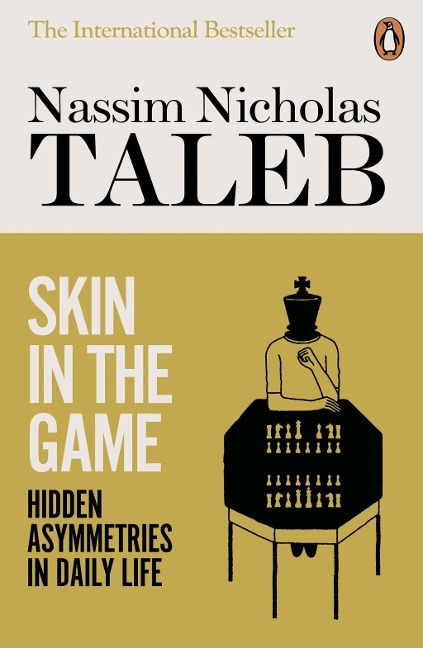
Skin in the Game: Hidden Asymmetries in Daily Life
-25% ar kodu BOOKS
Piegādātāja noliktavā
TOP
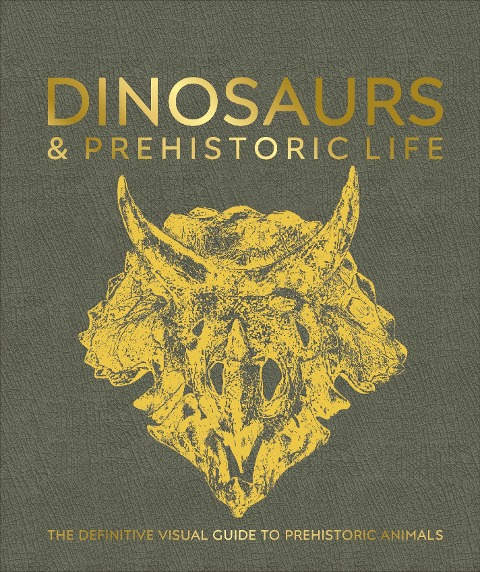
Dinosaurs and Prehistoric Life: The Definitive Visual Guide to Prehistoric Animals
-25% ar kodu BOOKS
Piegādātāja noliktavā
TOP
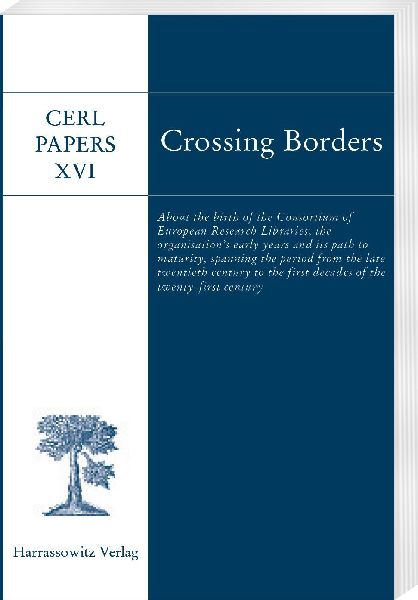
Crossing Borders: About the birth of the Consortium of European Research Libraries, the organisation's early years and its path to maturity, spanning the period from the late twentieth century to the first decades of the twenty-first century
-25% ar kodu BOOKS
Piegādātāja noliktavā
TOP

Cybernetics: Second Edition: Or the Control and Communication in the Animal and the Machine
-25% ar kodu BOOKS
Piegādātāja noliktavā
TOP
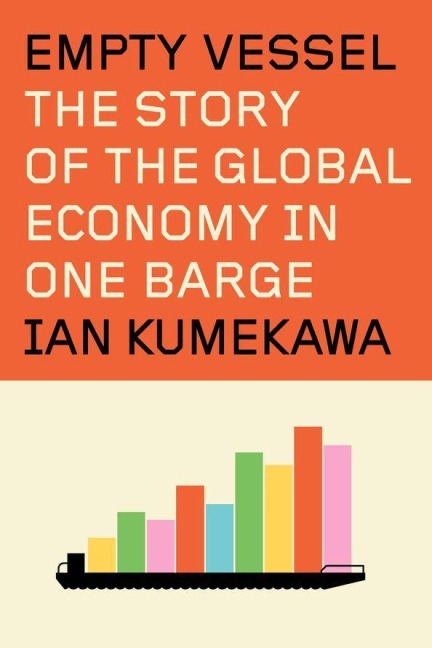
Empty Vessel: The Story of the Global Economy in One Barge
-25% ar kodu BOOKS
Piegādātāja noliktavā
TOP

101 Things I Learned in Architecture School
-25% ar kodu BOOKS
Piegādātāja noliktavā
TOP

Einhundert Zitate Female Edition: Ein Postkartenbuch mit 100 Zitaten
-25% ar kodu BOOKS
Piegādātāja noliktavā
TOP
Architektur Berlin, Bd. 15 | Building Berlin, Vol. 15: Baukultur in und aus der Hauptstadt | The latest architecture in and out of the capital
-25% ar kodu BOOKS
Piegādātāja noliktavā
 TOP
TOP
Only Dull People Are Brilliant at Breakfast
-24% ar kodu BOOKS
Piegādātāja noliktavā

Aprašymas
Inhaltsangabe:Abstract: The arts have always been influenced by new evolving technologies. A certain aesthetic turning point was brought about by the silent ?algorithmic revolution? we have not hardly noticed, as the curators of the Centre of Art and Media (ZKM) in Karlsruhe, Germany, propose with their current exhibition. At present, barely any part of social life is not influenced by these decision-making processes (algorithms) habitually executed by our computer devices. The radical changes this revolution causes for all of us are incalculable. However, we should not forget that algorithms, a well-defined set of technical instructions with a finite number of rules designed to solve a specific problem, have been incorporated as a creative instrument in the work of Albrecht D¿urer and other artists since the late middle ages. The strict application of algorithms in art ultimately led to works explicitly integrating the recipient into the creative process, eventually culminating in the new media arts. Today?s art practices transform observers into users. Emerging with the changing paradigm is a new type of creator of cultural artefacts. This has been accompanied now for more than two decades by a fruitful collaborative atmosphere between the formerly strictly separated traditions of art and science. More often than not artists like such as the pioneers Christa Sommerer, Laurent Mignonneau, and Jeffrey Shaw are at the same time scientific researchers found in institutional laboratories as heads of larger teams which include programmers, engineers and scientists of various different disciplines. They develop new hard- and software technologies themselves. All in all this development places not only an inestimable number of creative tools in the hands of the artist, but a highly dynamic and hybrid field that forms new areas like telepresence art, biocybernetic art, robotics, Net art, space art, experiments in nanotechnology, artificial or A-life art, creating virtual agents and avatars, datamining, mixed realities and database- supported art, which all explore the technologies of tomorrow. Not long ago, artists sought to explore software coding as the foundation of their expression and as a ?material? with specific properties. Like Max/MSP and others, new alternative programming environments based on a graphical interface concept facilitate bridging the gap between art and technology, and bring the artists back more control over the creative [¿]
Vairāk informācijas
| Autors | Frank Blum |
|---|---|
| Izdevējs | Diplom.de |
| Izlaides gads | 2007 |
| Vāka tips | Mīkstais vāks |
| EAN | 9783836602846 |