
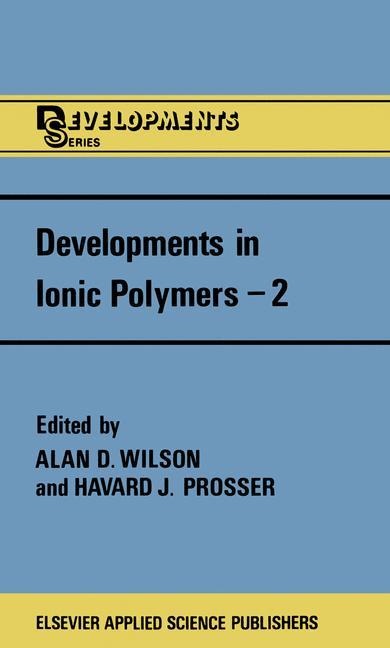
Developments in Ionic Polymers-2 -
-30% ar kodu BOOKS
Piegāde 12-18 darba dienu laikā
30 dienu atgriešanas politika
Ionic polymers, like elephants, are easier to recognise than to define. Several methods of classification have been attempted but none is wholly satisfactory because of the extreme diversity of ionic polymers, which range from the organic, water-soluble polyelectrolytes, through hydrogels and ionomer carboxylate rubbers, to the almost infusible inorganic silicate minerals. For this reason, a general classif ... Pilns apraksts
Jums varētu patikt arī


 TOP
TOP
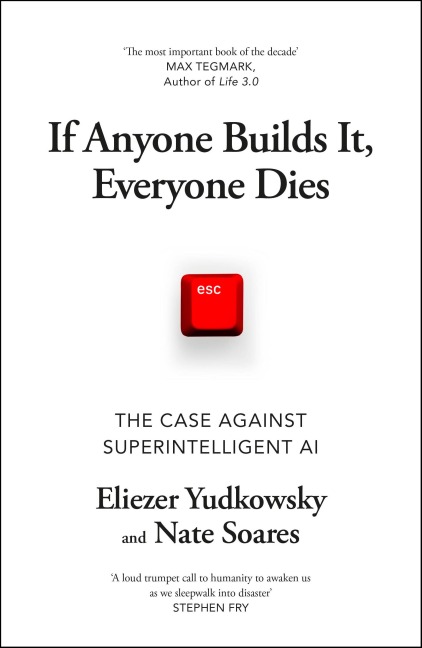
If Anyone Builds It, Everyone Dies: The Case Against Superintelligent AI
Eliezer Yudkowsky, Nate Soares
-30% ar kodu BOOKS
Piegādātāja noliktavā
TOP


We Are Not Machines: The Fight for the Future of Work
-30% ar kodu BOOKS
Piegādātāja noliktavā
TOP
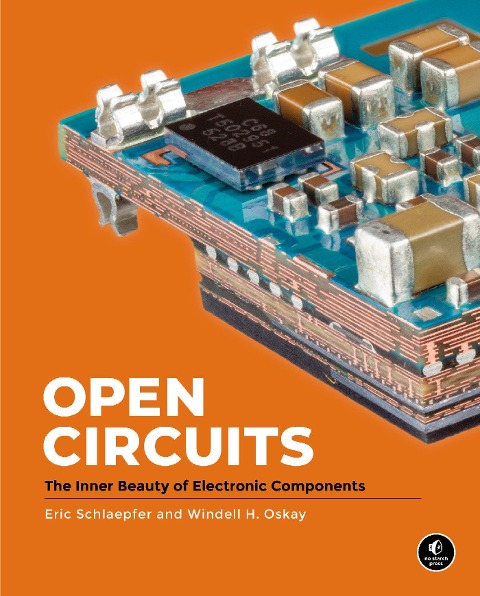
Open Circuits: The Inner Beauty of Electronic Components
Eric Schlaepfer, Windell Oskay
-30% ar kodu BOOKS
Piegādātāja noliktavā
TOP
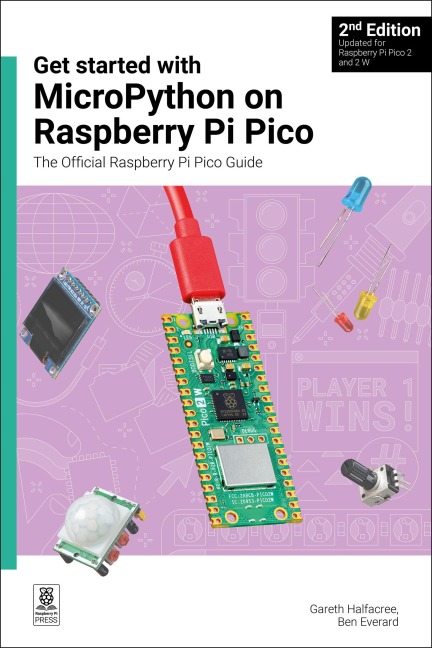
Get started with MicroPython on Raspberry Pi Pico: The Official Raspberry Pi Pico Guide
-30% ar kodu BOOKS
Piegādātāja noliktavā
TOP

Practical Electronics for Inventors
-30% ar kodu BOOKS
Piegādātāja noliktavā
TOP

Fundamentals of Aerodynamics ISE
Christopher Cadou, John D. Anderson
-30% ar kodu BOOKS
Piegādātāja noliktavā
TOP

Nucleo Boards Programming with the STM32CubeIDE: Hands-on in more than 50 projects
-30% ar kodu BOOKS
Piegādātāja noliktavā
TOP

Black Holes: The Key to Understanding the Universe
-30% ar kodu BOOKS
Piegādātāja noliktavā
TOP

Professional SMD Assembly: Practical Low-Cost Methods for Reliable PCB Production
-30% ar kodu BOOKS
Piegādātāja noliktavā
TOP

KiCad Like A Pro - Fundamentals and Projects: Getting started with the world's best open-source PCB tool
-30% ar kodu BOOKS
Piegādātāja noliktavā
TOP
Make: Electronics: Learning by Discovery: A hands-on primer for the new electronics enthusiast
-30% ar kodu BOOKS
Piegādātāja noliktavā
TOP

Data-Driven Science and Engineering: Machine Learning, Dynamical Systems, and Control
Steven L. Brunton, J. Nathan Kutz
-30% ar kodu BOOKS
Piegādātāja noliktavā
TOP

Flowers For Algernon: A Modern Literary Classic
-30% ar kodu BOOKS
Piegādātāja noliktavā
TOP

Foundations of Flavor: The Noma Guide to Fermentation: Including Step-By-Step Information on Making and Cooking with: Koji, Kombuchas, Shoyus, Misos, Vinegars, Garums, Lacto-Ferments and black Fruits Vegetables
-30% ar kodu BOOKS
Piegādātāja noliktavā
TOP

Digital Design and Computer Architecture, RISC-V Edition
-30% ar kodu BOOKS
Piegādātāja noliktavā
TOP

Blood in the Machine: The Origins of the Rebellion Against Big Tech
-30% ar kodu BOOKS
Piegādātāja noliktavā
TOP

Mastering the Arduino Uno R4: Programming and Projects for the Minima and WiFi
-30% ar kodu BOOKS
Piegādātāja noliktavā
TOP

Detailed Mechanical Design: A Practical Guide
-30% ar kodu BOOKS
Piegādātāja noliktavā
Aprašymas
Ionic polymers, like elephants, are easier to recognise than to define. Several methods of classification have been attempted but none is wholly satisfactory because of the extreme diversity of ionic polymers, which range from the organic, water-soluble polyelectrolytes, through hydrogels and ionomer carboxylate rubbers, to the almost infusible inorganic silicate minerals. For this reason, a general classification is not only difficult, but has minimal utility. However, there are some characteristics of these materials that should be highlighted. The role of counterions is the significant one. These ions, either singly or as clusters, take part in the formation of ionic bonds which have a varying structural role. Often they act as crosslinks, but in the halato-polymers the ionic bonds form an integral part of the polymer backbone itself. Conversely, in polymers contain ing covalent crosslinks, such as the ion-exchange resins, the coun terions have virtually no structural role to play, since they dwell in cage-like structures without affecting the crosslinking, and are readily exchanged. They are, perhaps, best described as ion-containing polymers rather than structural ionic polymers. Another crucial factor is the role of water in ionic polymers. The presence of ionic bonds means that there is a tendency for these materials to interact with water. Where the ionic polymer contains a high proportion of ionic units, it acts as a hydrogel and may be highly soluble. Such interactions with water decrease sharply as the ionic content is reduced, though even then water can act as a plasticiser.
Vairāk informācijas
| Izdevējs | Springer Netherlands |
|---|---|
| Izlaides gads | 2011 |
| Vāka tips | Mīkstais vāks |
| EAN | 9789401083607 |