
Complexity and Real Computation - Michael Shub,Steve Smale,Felipe Cucker,Lenore Blum

-30% ar kodu BOOKS
Piegāde 17-23 darba dienu laikā
30 dienu atgriešanas politika
Computational complexity theory provides a framework for understanding the cost of solving computational problems, as measured by the requirement for resources such as time and space. The objects of study are algorithms defined within a formal model of computation. Upper bounds on the computational complexity of a problem are usually derived by constructing and analyzing specific algorithms. Meaningful lowe ... Pilns apraksts
Jums varētu patikt arī
 TOP
TOP

Determined: The Science of Life Without Free Will
-30% ar kodu BOOKS
Piegādātāja noliktavā
TOP

The Light Eaters: How the Unseen World of Plant Intelligence Offers a New Understanding of Life on Earth
-30% ar kodu BOOKS
Piegādātāja noliktavā
 TOP
TOP
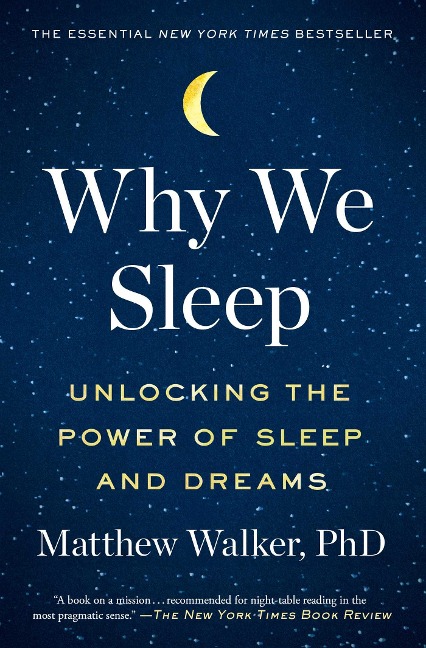
Why We Sleep: Unlocking the Power of Sleep and Dreams
-30% ar kodu BOOKS
Noliktavā
TOP

The Rise and Fall of the Dinosaurs: A New History of a Lost World
-30% ar kodu BOOKS
Piegādātāja noliktavā
TOP

Biology: A Global Approach, Global Edition
Neil Campbell, Rebecca Orr, Lisa Urry, Peter Minorsky, Michael Cain, Jane Reece, Steven Wasserman
-30% ar kodu BOOKS
Piegādātāja noliktavā
TOP

Six Not-so-easy Pieces: Einstein's Relativity, Symmetry, and Space-Time
Richard P. Feynman, Robert B. Leighton, Matthew Sands
-30% ar kodu BOOKS
Piegādātāja noliktavā
TOP


The Age of Alchemy: How Early Innovators Shaped Modern Chemistry
-30% ar kodu BOOKS
Piegādātāja noliktavā
TOP

The Secrets of our DNA: How Genetics has Changed the World
-30% ar kodu BOOKS
Piegādātāja noliktavā
TOP

Janeway's Immunobiology
Leslie J. Berg, Kenneth Murphy, Casey Weaver
-30% ar kodu BOOKS
Piegādātāja noliktavā
TOP

How to Solve it: A New Aspect of Mathematical Method
-30% ar kodu BOOKS
Piegādātāja noliktavā
TOP
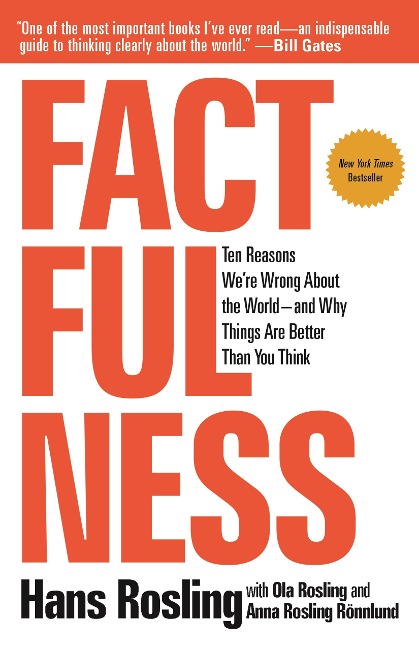
Factfulness: Ten Reasons We're Wrong About the World--and Why Things Are Better Than You Think
Ola Rosling, Anna Rosling Rönnlund, Hans Rosling
-30% ar kodu BOOKS
Piegādātāja noliktavā
TOP
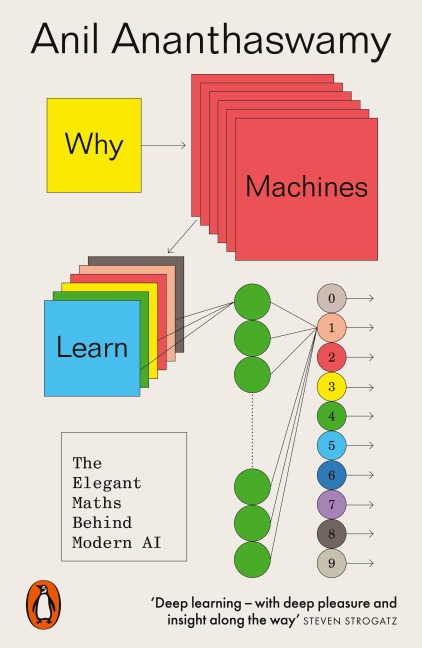
Why Machines Learn: The Elegant Maths Behind Modern AI
-30% ar kodu BOOKS
Piegādātāja noliktavā
TOP

The Feynman Lectures on Physics. The New Millennium Edition
Matthew Sands, Robert Leighton, Richard Feynman
-30% ar kodu BOOKS
Piegādātāja noliktavā
 TOP
TOP

Entangled Life: How Fungi Make Our Worlds, Change Our Minds and Shape Our Futures
-30% ar kodu BOOKS
Piegādātāja noliktavā
TOP

Life As No One Knows It: The Physics of Life's Emergence
-30% ar kodu BOOKS
Piegādātāja noliktavā
TOP

The Rise and Reign of the Mammals: A New History, from the Shadow of the Dinosaurs to Us
-30% ar kodu BOOKS
Piegādātāja noliktavā
TOP
Learn Faster, Perform Better: A Musician's Guide to the Neuroscience of Practicing
-30% ar kodu BOOKS
Piegādātāja noliktavā
TOP
The Brain That Changes Itself: Stories of Personal Triumph from the Frontiers of Brain Science
-30% ar kodu BOOKS
Piegādātāja noliktavā
Aprašymas
Computational complexity theory provides a framework for understanding the cost of solving computational problems, as measured by the requirement for resources such as time and space. The objects of study are algorithms defined within a formal model of computation. Upper bounds on the computational complexity of a problem are usually derived by constructing and analyzing specific algorithms. Meaningful lower bounds on computational complexity are harder to come by, and are not available for most problems of interest. The dominant approach in complexity theory is to consider algorithms as oper ating on finite strings of symbols from a finite alphabet. Such strings may represent various discrete objects such as integers or algebraic expressions, but cannot rep resent real or complex numbers, unless the numbers are rounded to approximate values from a discrete set. A major concern of the theory is the number of com putation steps required to solve a problem, as a function of the length of the input string.
Vairāk informācijas
| Autors | Michael Shub, Steve Smale, Felipe Cucker, Lenore Blum |
|---|---|
| Izdevējs | Springer New York |
| Izlaides gads | 1997 |
| Vāka tips | Cietais vāks |
| EAN | 9780387982816 |